Bulelani Mabhayi “The Monster of Tholeni”
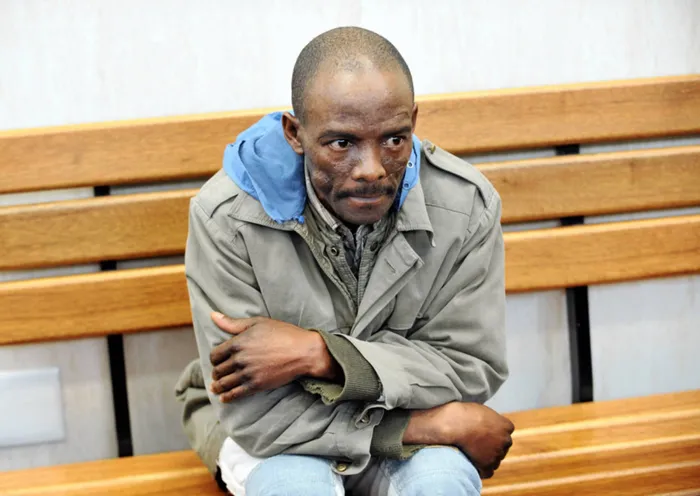
In August 2013, serial killer Bulelani Mabhayi stood in a South African courtroom and apologized. Regret was expressed for his crimes to the people of Tholeni and all citizens.
Less than an hour later, he admitted a chilling truth. If not arrested, he would still be raping and killing.
Between 2007 and 2012, Mabhayi murdered 20 people—mostly women and children. He became known as the Monster of Tholeni.
The Crimes That Terrorized Tholeni
The nightmare began in May 2007. Tholeni was a small rural village in the Eastern Cape. Situated quietly along the N2 freeway, the community lay about 15 kilometers from Butterworth. Herds of cattle grazed on sparse vegetation. Most residents kept livestock or took odd jobs to survive.
This was a place where people knew their neighbors. Unlocked doors were common. That changed when the first body was discovered.
Over the next five years, Mabhayi would claim 19 more victims in Tholeni. One woman from a neighboring village also fell prey. Always the same, his targets were households headed by women. No adult men lived in these places.
Breaking in at night became his method. A panga or axe accompanied him. Some victims were raped before being hacked to death. Just 14 months old was the youngest. The oldest was 79.
The pattern was calculated and cruel. Many of his victims knew him personally. Working as a builder in the community, Mabhayi often performed repairs. Homes he would later invade became his workplaces. “Dlayedwa”—the lonely man—was what residents called him. Something darker lay beneath that isolation.
As the body count rose, fear consumed Tholeni. Fleeing to a local victim support center at night, women and children became too terrified to sleep in their own homes. A new, grim nickname emerged for the village: the village of death.
The Capture and Investigation
For years, police struggled to identify the killer. Stretched thin, the investigation covered the barren Eastern Cape landscape.
In May 2010, investigators took a bold step. DNA and fingerprints from hundreds of men over 16 in Tholeni were tested. Among them was Mabhayi. But arriving without identification created a problem. Processing his fingerprints became impossible. The saliva sample was stored away.
The breakthrough came two years later. On August 11, 2012, another murder scene was discovered. Making a mistake this time, Mabhayi left behind evidence. A shoe print remained at the scene. Unusually large and uncommon in the village, the print became the key.
Within hours, police traced it back to him. Leading the operation was Captain Aaron Hanise of the Hawks. The arrest came the next day while Mabhayi napped at a house in Tholeni.
Crucial evidence emerged from the 2010 saliva sample. DNA analysis linked it definitively to biological traces at multiple crime scenes. Finally caught, the Monster of Tholeni faced 36 charges: 20 counts of murder, six of rape, and 10 of housebreaking.
The Courtroom Confession
The trial began in August 2013 at the Mthatha High Court. Accommodating the case’s local impact, Butterworth hosted the proceedings.
On August 28, each charge was read aloud. Responding in Xhosa to every one, Mabhayi said: “ndinetyala”—I am guilty.
A detailed statement was read by his defense counsel. Laid bare was how he committed the crimes. Weeping openly, families of victims struggled to process the horror. Overcome by grief, some had to be led from the courtroom.
Throughout it all, Mabhayi showed little emotion. Mumbled responses were all he offered. Avoided was any eye contact. An eerie detachment remained constant.
Then came the apology. Standing before the judge and the grieving families, he spoke. Offered to the people of Tholeni and all citizens of South Africa was his apology.
But the remorse didn’t last. Questioning him was State prosecutor Advocate Ndoyisile Lamla. Did you intentionally target women-headed households with children? Simple was Mabhayi’s answer: “ndiyavuma”—that is correct.
Then came his most disturbing admission. Had the arrest not happened in August 2012, he would still be out there. Raping would continue. Killing would continue.
The contradiction stunned those present. How could someone apologize and then confess they would have continued? Testifying about the fear that gripped Tholeni was community activist Nomfundiso Mpontshane. Clear was the community’s position:
“We will never forgive him. What he did was very terrible. We won’t accept his apology.”
Understanding the Mind of a Serial Killer
Mabhayi’s behavior in court revealed something common among serial offenders. Mimicking remorse without truly feeling it is an ability they possess.
An attempt to show contrition likely motivated his apology. Reducing his sentence may have been the goal. But his subsequent admission exposed the truth. No genuine regret existed.
Experts note that many serial killers demonstrate a “mask of sanity.” Normal appearances, even charm, conceal deeply antisocial tendencies. Perfectly fitting this pattern was Mabhayi.
A familiar face in Tholeni, he was trusted enough to work inside people’s homes. Yet methodical selection of victims he could overpower defined his approach. His method involved waiting for moments of maximum vulnerability.
Some context came from his childhood. Losing his father at age 12 was Mabhayi’s first tragedy. A year later, his mother died. Time in Pollsmoor Prison as a young man for dealing cannabis followed.
These early losses and instability may have shaped him. But the calculated nature of his crimes defies explanation. His targets were the defenseless. Exploited was his community standing. And when asked why he killed, a chilling reason emerged. Knowing him and being able to identify him sealed his victims’ fates.
Impact and Aftermath
On September 3, 2013, Judge Noluthando Conjwa delivered the sentence. Twenty-five life sentences to run concurrently. Effectively, 625 years behind bars awaited him.
Direct assessment came from the judge.
“Mr. Mabhayi, you are definitely not a person that society needs,” she said.
Questions arose about how he had evaded capture for so long.
Silence filled the courtroom as the sentence was read. Looking at the families in the gallery remained something Mabhayi wouldn’t do.
For the residents of Tholeni, the verdict brought a measure of justice. But little peace came with it. Undone by a courtroom judgment, years of trauma could not be erased.
The village continues to grapple with its dark history. Established where frightened families once sought refuge was a community nutrition center. Counseling and support are now provided there. But Tholeni’s identity remains scarred.
Broader issues were also highlighted by the case. Remaining epidemic in South Africa is violence against women. Starkly underscored by Mabhayi’s crimes was the vulnerability of female-headed households in rural areas. Limited resources and police presence characterize these regions. Arising from his five-year killing spree were difficult questions about law enforcement response times.
You may also like